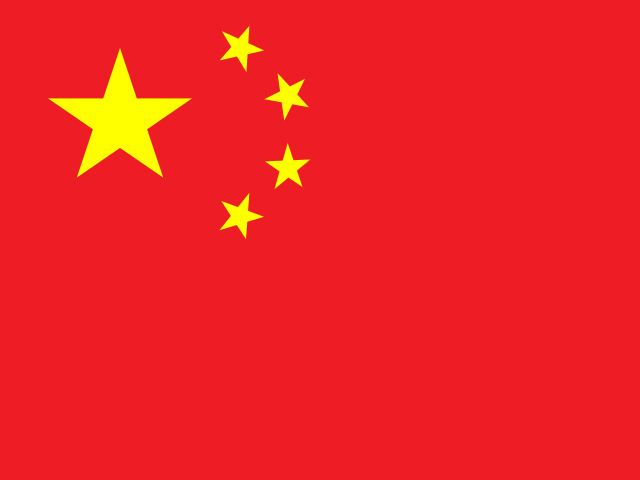
 China
ChinaBottom Line
This week's most notable geopolitical developments are the sustained tensions in China's relations with Taiwan and the United States, but China is simultaneously advancing diplomatic interactions with North Korea and South Korea, signaling a strategic balancing intent. Investors should focus on the potential impact of cross-strait exchange restrictions on the IT supply chain, as well as the effects of US-China trade frictions on technology cooperation in the energy and mining sectors, while also noting opportunities for the aviation and logistics industries arising from expanded China-South Korea air routes.
Key Developments
-
Taiwan Affairs Office Criticizes DPP for Smearing Cross-Strait Exchange Activities, Restricting Cross-Strait Forum — On June 10, 2026, at a regular press conference, the State Council Taiwan Affairs Office accused the Democratic Progressive Party (DPP) authorities of slandering and restricting exchange activities such as the Strait Forum, emphasizing that the DPP lacks sincerity in promoting cross-strait peace. Investment relevance: Cross-strait tensions may impact the IT hardware supply chain, particularly in semiconductors and electronics manufacturing, as Taiwan's manufacturing investments in mainland China face policy uncertainty.
-
China Simultaneously Advances Relations with North Korea and South Korea, Resumes China-North Korea International Trains and Expands China-South Korea Route Rights — Beijing has recently improved relations with both Pyongyang and Seoul simultaneously, including resuming China-North Korea international train services (June 4) and expanding air traffic rights on China-South Korea routes. South Korea's Ministry of Land, Infrastructure and Transport announced relevant measures on June 4. Investment relevance: The resumption of China-North Korea transportation benefits border trade and mining resource logistics; the expansion of China-South Korea routes positively catalyzes aviation, tourism, and high-end manufacturing (such as IT equipment transport).
-
Chinese Consul General in New York Chen Li Points Out at US-China Business Leaders Roundtable That Decade of Trade Frictions Has Harmed Corporate Interests — On June 11, 2026, the Consul General delivered a speech at the dinner of the 17th US-China Business Leaders Roundtable, reviewing how US-China economic and trade relations have suffered over the past decade due to frictions and interference, with businesses bearing the consequences. Investment relevance: Signs of cooling US-China relations persist, with two-way investment and technology exports in the energy and mining sectors facing increased scrutiny risks, but dialogue mechanisms may preserve some buffer space for certain enterprises.
Sector Implications
| Sector | Impact | Key Focus |
|---|---|---|
| IT | Negative | Cross-strait political opposition may disrupt semiconductor and electronics supply chains; US-China tech frictions persist |
| Mining | Neutral | Resumption of China-North Korea transportation benefits mineral resource logistics, but US-China frictions limit critical mineral trade cooperation |
| Energy | Neutral | Damaged US-China economic relations affect energy technology cooperation; China-South Korea route expansion indirectly boosts aviation fuel demand |
Details:
- IT: The Taiwan Affairs Office's criticism of the DPP suggests Beijing may increase pressure on Taiwanese enterprises, particularly through higher tariffs or non-tariff barriers on semiconductors and electronic components imported from Taiwan. US-China trade frictions place tech companies under dual pressure.
- Mining: The resumption of China-North Korea international trains facilitates logistics for importing North Korean minerals (such as rare earths and tungsten), but actual incremental gains are limited due to international sanctions. Strained US-China relations hinder Chinese mining companies' listings in the US and technology acquisition.
- Energy: Trade frictions highlighted at the US-China Business Leaders Roundtable may slow the signing of liquefied natural gas (LNG) procurement agreements, but the expansion of China-South Korea routes will increase aviation kerosene demand, offering a moderate positive for domestic refining companies.
Geopolitical Pulse
| Indicator | Assessment | Trend |
|---|---|---|
| Diplomatic Climate | Cooling | Deteriorating |
| Sanctions Risk | Medium | Stable |
| Regional Stability | Uncertain | Stable |
| Key Dynamics | Multi-Line Balancing | — |
Risk Watch
-
Cross-Strait Supply Chain Disruption Risk — If the DPP further restricts the Strait Forum or Beijing imposes economic countermeasures against Taiwan, the IT industry (especially semiconductors) may face delivery delays or supply cutoffs. Timeframe: Short-term. Probability: Medium.
-
Secondary Sanctions Risk from China-North Korea Railway Resumption — International sanctions against North Korea remain in effect; the resumption of China-North Korea train operations may attract increased scrutiny from US entities, and mining companies with business ties to North Korea should exercise caution. Timeframe: Medium-term. Probability: Low to Medium.
Outlook
Dates and Events to Watch:
- Subsequent cross-strait interactions following the Strait Forum (expected summer 2026)
- Next round of US-China trade negotiations or sanctions update announcements (no specific date; watch for second half of 2026)
- Signals from South Korea's new government (no change information) or North Korea's foreign policy
Strategic Considerations: China's geopolitical strategy is shifting from unilateral pressure to multi-line balancing. Investors should diversify regional exposure, focus on logistics and consumer opportunities from China-South Korea route expansion, and prepare supply chain backups for potential risks related to Taiwan and the US.