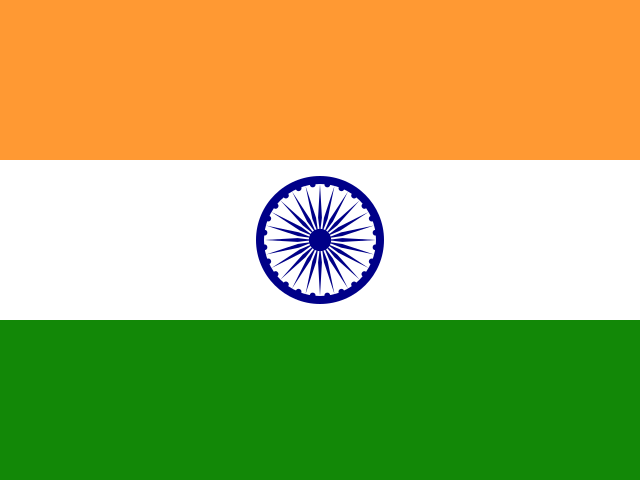
 India
IndiaBottom Line
In early February 2026, the India-US interim trade agreement is the most significant development for investors, set to directly benefit export-driven sectors like textiles, gems & jewellery, and auto components. However, risk of regional tension persists following statements by Pakistan's Prime Minister on Kashmir. Investors should monitor the finalization of the agreement by mid-March and the security situation in border areas.
Key Developments
-
18% Tariff Cut in India-US Interim Trade Deal — Commerce Minister Piyush Goyal announced that a joint statement will be issued in 4-5 days and the first phase of the agreement will be finalized by mid-March. The US has proposed an 18% tariff reduction. Investment Relevance: This deal is a major win for Indian exporters, particularly in textiles, gems & jewellery, and auto components sectors. Easier access to the US market is likely to lead to direct revenue growth in these industries.
-
India's Strong Response to Pakistani PM's Kashmir Remarks — India issued a strong protest after Pakistan's Prime Minister referred to Kashmir as part of Pakistan, escalating bilateral friction. Investment Relevance: This increases the risk of regional instability, which could disrupt infrastructure projects or trade routes in border areas. There is also a potential for increased security expenditure.
-
SBI Report on Oil Purchase from Venezuela — According to a report by the State Bank of India (SBI), purchasing crude oil from Venezuela could save India approximately ₹27,081 crore (about $3.2 billion) annually. Investment Relevance: This is part of India's energy security strategy, which will reduce import costs and could positively impact refiners' margins. However, it must be viewed in the context of US sanctions.
-
PM Modi's Malaysia Visit & Brazilian President's India Tour — Prime Minister Modi's visit to Malaysia on 7-8 February and the upcoming visit of Brazilian President Lula are expected to inject new momentum into bilateral relations and trade. Investment Relevance: This will expand India's diplomatic and economic reach in Southeast Asia and Latin America, opening opportunities for access to new markets, particularly in agriculture, defense, and digital sectors.
-
Plan to Launch 55 Military Satellites — India is planning to launch 55 military satellites, which will enhance space-based surveillance and communication capabilities. Investment Relevance: This is positive for the country's space and defense manufacturing ecosystem. New contract opportunities will emerge for private companies and start-ups associated with the defense and space sectors.
Sector Implications
| Sector | Impact | Key Concern |
|---|---|---|
| IT | Positive | Stronger relations with the US create a favorable environment for digital trade and service exports |
| Mining | Positive | Discussions with a US senator open new avenues for cooperation in the supply chain of critical minerals |
| Energy | Positive | Oil imports from diverse sources, including Venezuela, improve energy security and cost efficiency |
Details:
- IT: The India-US trade agreement is likely to foster consensus on the digital economy and data flows, which could ease market access for IT & ITeS companies.
- Mining: The Jaishankar-Rubio talks focused on critical minerals. This signals an intent to increase India's participation in the global supply chain for minerals like cobalt, lithium, and rare earth elements, boosting the mining and processing sector.
- Energy: The SBI report highlights oil imports from Venezuela as a strategic option. This is part of India's 'source diversification for energy security' policy and could help refining companies reduce costs, although risks persist due to US sanctions.
Geopolitical Pulse
| Indicator | Assessment | Trend |
|---|---|---|
| Diplomatic Climate | Warming | Improving |
| Sanctions Risk | Low | Stable |
| Regional Stability | Uncertain | Stable |
| Key Dynamic | Strategic autonomy through trade partnerships | — |
Risk Watch
-
Escalation of India-Pakistan Border Tensions — Aggressive statements by Pakistani leadership raise the risk of sporadic clashes at the border or disruption of trade routes. Timeline: Near-term. Probability: Medium.
-
Delay in Final Stage of India-US Trade Deal — Political or bureaucratic hurdles could cause a delay in the mid-March deadline, potentially dashing market expectations. Timeline: Near-term. Probability: Low-Medium.
-
Political Disruption in Oil Supply from Venezuela — Venezuela's internal political situation or changes in US sanctions could affect the oil supply chain. Timeline: Medium-term. Probability: Medium.
Outlook
Key Dates & Events to Monitor:
- Mid-March 2026: Expected date for the final announcement of the first phase of the India-US interim trade agreement.
- End of February 2026: Visit of Brazilian President Lula to India, potentially leading to agreements on agricultural trade, energy, and defense cooperation.
- Coming Weeks: Implementation of bilateral agreements following the Malaysia visit and opportunities for a 'reset' in relations with Bangladesh.
Strategic Consideration: India is advancing on multiple fronts simultaneously—expanding trade with the West, strengthening ties with the East and South, and seeking alternative sources for energy security. This multi-dimensional strategy offers investors stability and growth opportunities, although tensions in the neighborhood remain a persistent risk.